
A buyer who once typed “best accounting software for a small business” into Google may now ask an AI assistant to compare options, explain pricing models, and recommend a provider. AI search changes that journey. Instead of competing only for a blue-link click, businesses are competing to become a credible source inside the answer itself.
For small and mid-sized businesses, this is not a reason to abandon SEO or chase every new tool. It is a reason to build a website that explains what you do clearly, proves why you are credible, and helps both search engines and AI systems connect your business to real customer questions. The commercial goal remains the same: earn qualified attention that can become leads, sales, bookings, or repeat customers.
Table of Contents
1. What AI Search Actually Changes
Traditional search generally presents a results page and lets the user choose where to click. AI-powered search experiences often summarize information first. They may compare products, answer follow-up questions, identify local options, or pull together a recommendation from several sources.
That creates a different visibility model. A business can still benefit from ranking well in organic search, but the opportunity is broader. Your content may be referenced, summarized, or used to support an answer before a customer visits your site. In some cases, the user gets enough information without clicking. In others, the AI-generated response narrows the shortlist and sends a more informed prospect to your website.
This is why rankings alone are no longer a complete reporting story. A page ranking in position three may generate fewer visits than before, yet the business could still be appearing in AI answers and gaining stronger brand recognition. The reverse is also possible: broad informational content may receive mentions but produce little commercial value. Context matters.
AI search does not replace the need for a fast, useful, technically sound website. It raises the cost of vague pages, copied product descriptions, unsupported claims, and content written only to attract impressions. Systems need reliable information to work with, and customers still need a convincing reason to choose you.
2. The Signals AI Systems Need From Your Website
AI search platforms differ in how they select and present sources. Avoid assuming that every assistant uses the same signals or a fixed formula. For Google, the practical starting point is its official guidance on optimizing for generative AI search, which connects visibility to useful content and established SEO foundations.
Clear commercial positioning
A visitor and a search system should quickly understand your offer. State who you serve, what problem you solve, where you operate, and what makes the service or product appropriate for a particular need. A service page that says “quality solutions for modern businesses” says very little. A page that explains the service, ideal customer, process, deliverables, pricing approach, and expected business outcome gives the system something usable.
This is particularly important for businesses with multiple offers. Separate your services logically rather than forcing every audience onto one general page. A buyer looking for e-commerce SEO has different questions from a founder seeking website development or workflow automation.
Evidence that supports your claims
Generic statements such as “we are the best” do not build trust. Specific proof does. Use case studies, measurable outcomes where permission allows, detailed examples of work, team expertise, certifications, product specifications, customer policies, and original insights from actual operations.
For an e-commerce store, evidence can include accurate product attributes, shipping information, sizing details, care instructions, stock status, and genuine reviews. For a service business, it can include process documentation, sample deliverables, client industries served, and clear answers to common objections. The best content often comes from the questions sales teams and customers already ask every week.
Pages built around complete answers
A shallow article that repeats a keyword is unlikely to help a buyer or earn lasting visibility. Build pages that answer the full decision behind the query. If someone searches for business automation, they may need to know which tasks can be automated, what tools are involved, what implementation requires, what mistakes to avoid, and whether the investment makes sense for a small team.
That does not mean putting every topic into one oversized page. It means giving each page a clear job. A core service page should explain the offer and encourage the next commercial step. Supporting articles can handle specific questions in more depth. Product pages should help shoppers confidently evaluate and purchase.
3. A Practical AI Search Content Plan
The most effective approach starts with customer intent, not a list of trendy prompts. Review your inquiries, sales calls, support requests, product reviews, and search data. Look for questions that appear before a purchase, during comparison, and after someone becomes a customer.
Then organize content around the customer journey. Early-stage content can explain a problem or define options. Consideration-stage content can compare approaches, costs, tools, or implementation paths. Decision-stage pages should make the offer, scope, proof, and next action clear.
For many businesses, four content assets deserve attention first:
- A focused page for each revenue-driving service or product category
- A detailed FAQ section that answers real buying questions without hiding key information
- Proof pages featuring case studies, testimonials, credentials, or operational experience
- Supporting guides that explain high-intent topics customers research before choosing a vendor
Keep the writing natural. Use the terms customers use, but do not force the phrase AI search into every paragraph. Clear language performs better than awkward optimization. A useful test is simple: could a salesperson use this page to answer a prospect’s question without rewriting it in an email?
4. Technical SEO Still Carries the Load
AI visibility is often discussed as if content alone decides the outcome. It does not. If your site is slow, difficult to crawl, poorly structured, or confusing on mobile, you create unnecessary friction for users and search platforms alike.
Start with the basics: secure pages, clean navigation, descriptive page titles, logical headings, internal links that connect related topics, image alt text where relevant, and pages that load reliably on mobile devices. Make sure key commercial information is available in the page content rather than buried inside graphics, inaccessible tabs, or downloadable files.
Structured data can also help search systems interpret information such as products, services, organizations, reviews, FAQs, and local business details. It is not a shortcut to guaranteed AI citations. Used correctly, though, it reduces ambiguity and reinforces what your pages are about.
For businesses serving specific cities, regions, or countries, local accuracy is critical. Keep your business name, contact details, service areas, operating hours, and location information consistent. AI systems can surface outdated details quickly, which damages trust at the exact moment a prospect is ready to act.
5. Measure Business Impact, Not Just Mentions
An AI mention can feel like a win, but it is not automatically valuable. A company needs to know whether increased visibility is producing the right kind of demand. Track organic traffic, branded searches, qualified leads, conversion rate, sales assisted by content, and the performance of pages tied directly to revenue.
Also watch changes in the questions visitors ask. When prospects arrive already informed about your process or pricing, that may indicate they encountered useful information before reaching your site. Add a simple “How did you hear about us?” field to inquiry forms and train sales teams to record patterns. Attribution will not be perfect, but better first-party feedback is more useful than guessing.
Be cautious with vanity metrics. A guide can attract thousands of visits from people outside your market while a smaller service page generates five serious conversations a month. For most growing businesses, the second result is more valuable.
6. Where Businesses Get AI Search Wrong
The first mistake is treating AI visibility as a one-time project. Customer language, platform behavior, competitor content, and your own offerings change. Review priority pages regularly, especially when you launch services, change pricing, expand locations, or notice repeated objections in sales conversations.
The second mistake is publishing unedited AI-generated content at scale. AI can help with outlines, research organization, content repurposing, and first drafts. It cannot replace firsthand experience, commercial judgment, fact checking, or a clear point of view. Thin pages can weaken trust even when they are grammatically polished.
The third mistake is separating content from operations. If your website promises a fast turnaround, transparent pricing, or nationwide delivery, the business must be able to deliver it. The strongest search strategy cannot compensate for an unclear offer or a poor customer experience.
Futura Group approaches this work as part of a wider growth system: useful pages, sound technical foundations, practical automation, and conversion-focused user journeys. That combination matters because visibility only becomes valuable when a business can turn attention into action.
AI search will continue to change the route customers take to a decision. Build for the questions your best customers genuinely ask, show the evidence behind your answers, and make the next step easy when they are ready to buy.
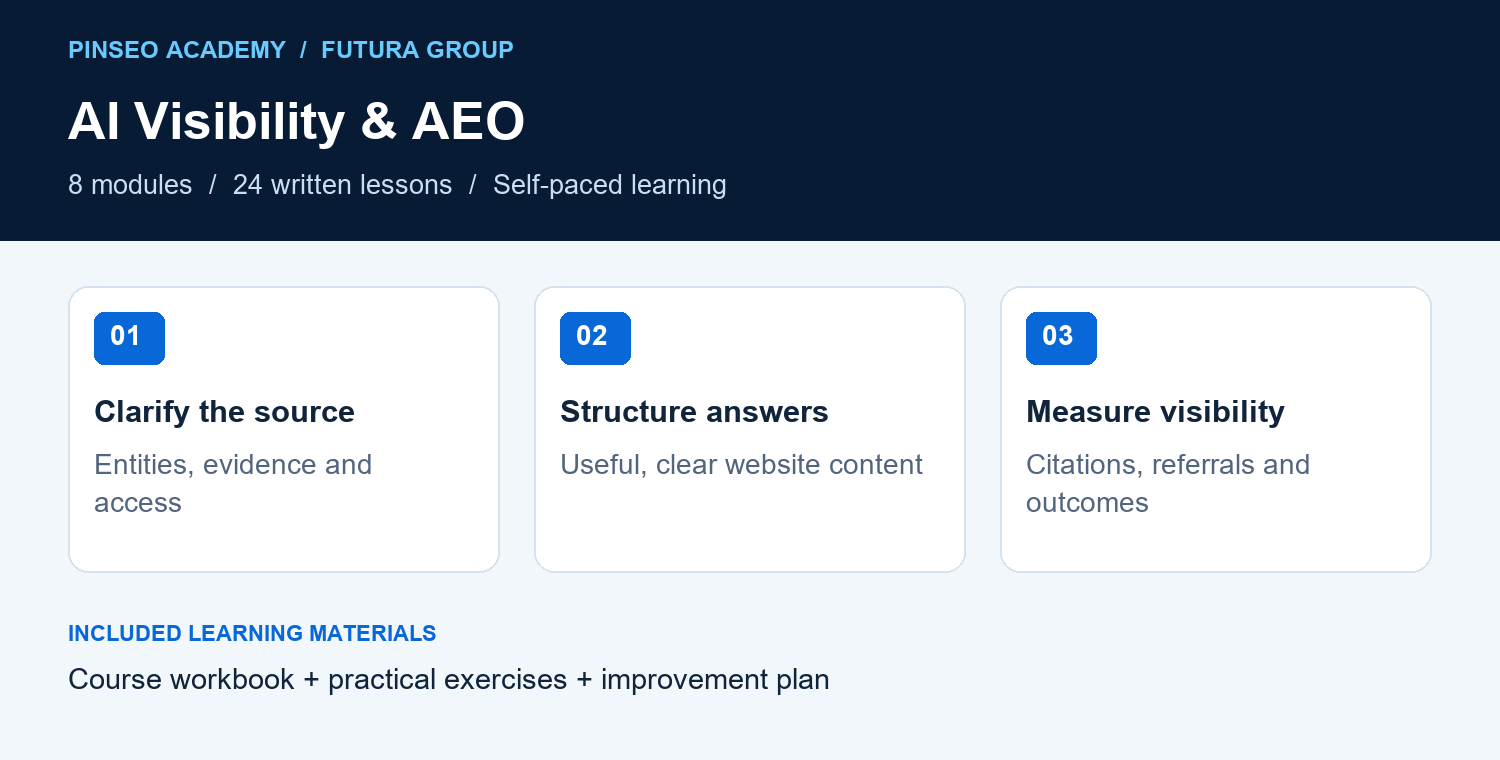
Build Your AI Search Action Plan
Choose one important service or product category, identify the questions buyers ask and review whether the page answers them with clear evidence. Then check mobile usability and the route to an inquiry or purchase. Keep a record of the changes and compare qualified outcomes over time.
Contact Futura Group to discuss an AI search visibility review covering your priority pages, technical foundations and conversion path. Bring your website, target audience and the commercial result you want to improve.