

A store can receive thousands of visits and still struggle to grow if shoppers hesitate at the product page, lose confidence at checkout, or cannot find the right item quickly enough. Ecommerce conversion consulting focuses on those commercial gaps. It examines how real people move through your store, where revenue is leaking, and what changes are most likely to produce more completed orders.
For a growing business, this work should not begin with a long redesign wish list. It should begin with a simple commercial question: what is stopping qualified visitors from buying today?
In this guide
What ecommerce conversion consulting actually covers
Ecommerce conversion consulting is the process of improving the percentage of visitors who take a valuable action on your ecommerce site. Usually that action is a purchase, but it can also include adding a product to cart, starting checkout, requesting a quote, joining a wholesale program, or submitting an inquiry for a higher-value product.
The goal is not to make a website look busier or more fashionable. The goal is to make buying easier and more convincing for the right customer. That requires a mix of customer research, analytics, page improvement, technical review, and testing.
A useful ecommerce conversion consultant looks beyond the headline conversion rate. A 1% conversion rate may be strong for a high-ticket, considered purchase and weak for a low-cost, repeat-purchase product. Traffic source, product category, device mix, shipping region, price point, and average order value all affect what a realistic target looks like.
That is why generic advice such as “add more pop-ups” or “make the button green” rarely moves the business forward. A store needs decisions based on its own data, customer questions, and sales process.
Where ecommerce stores commonly lose sales
Most conversion problems are not caused by one dramatic failure. They come from small points of friction that compound as a shopper moves from search result to checkout.
Traffic arrives with the wrong expectations
A product page cannot convert traffic that was attracted by an irrelevant keyword, misleading ad, or vague social post. Search visibility and conversion are connected. If a page ranks for a broad query but does not clearly match buyer intent, visitors may leave even when the product itself is good.
This is especially relevant for stores investing in SEO or AI search visibility. More discovery is valuable only when the landing page answers the searcher’s immediate question and gives them a credible next step.
Product pages answer too little
Shoppers need more than a title, price, and a few product photos. They want to know whether the item fits their use case, what makes it different, when it will arrive, what happens if it is not right, and whether the business is trustworthy.
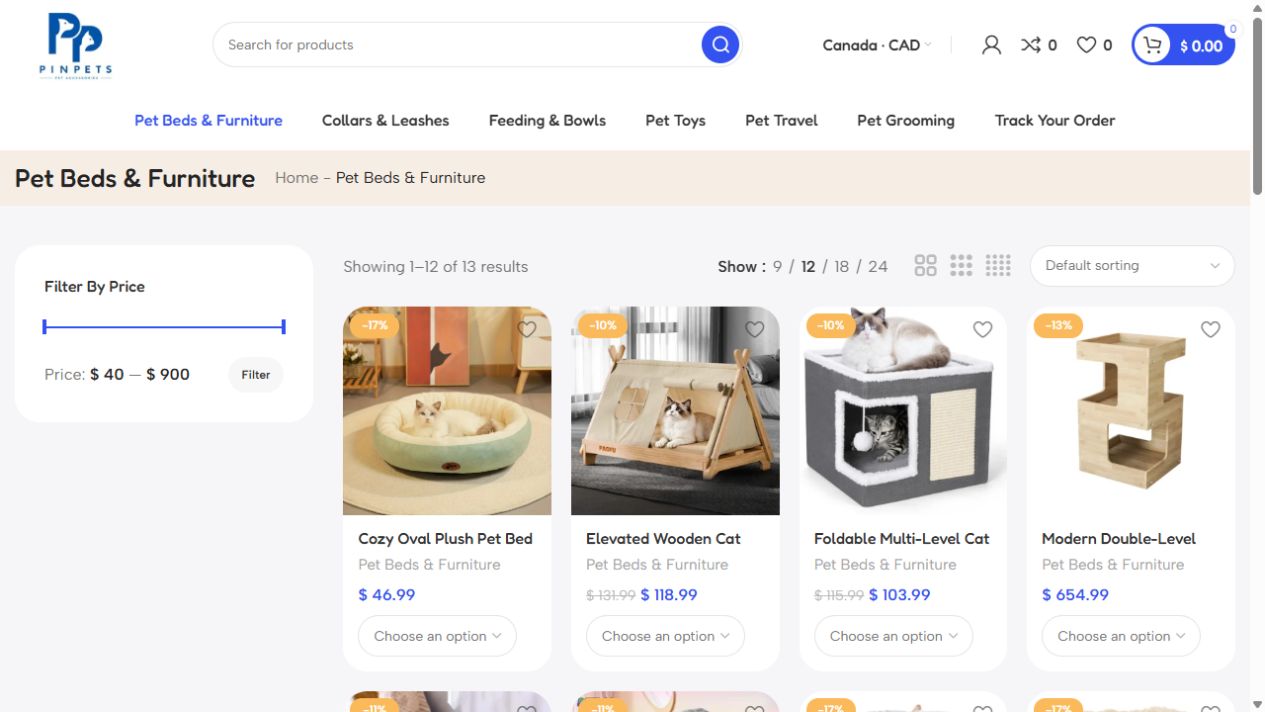
For apparel, that may mean accurate sizing guidance, fabric details, model measurements, and return information. For pet products, buyers may need material specifications, safety details, and guidance on which pet size the item suits. For B2B or wholesale products, buyers often need minimum order quantities, lead times, packaging information, and a fast route to speak with someone.
Mobile checkout creates unnecessary work
Many store owners review their sites on a desktop computer while most customers browse on mobile. A small screen makes every extra field, slow image, unclear error message, and forced account creation more expensive.
Mobile conversion work often produces practical gains: simplify form fields, show shipping costs earlier, support trusted payment options, improve button placement, and reduce page weight. These changes may sound basic, but basic friction is still friction.
Trust appears too late
A customer who has never heard of your business is making a risk decision, not just a product decision. They may wonder whether the product is real, whether delivery is reliable, or whether they can reach a human if something goes wrong.
Trust signals work best near the moment of doubt. Clear contact details, delivery expectations, return policies, secure payment cues, authentic reviews, and useful product information should support the buying decision without crowding the page. The right mix depends on your market. A local store may benefit from visible regional delivery details, while an international seller may need clearer duty, currency, and shipping information.
A practical ecommerce conversion consulting process
Effective ecommerce conversion consulting follows four steps. Diagnose the issue, prioritize the opportunity, implement changes, and measure the outcome. Skipping the diagnosis stage often leads to expensive work that improves appearances without improving sales.
Start with the numbers, then investigate behavior
Analytics can show where shoppers exit the funnel. Review sessions, product page views, add-to-cart rates, checkout starts, purchase completion, revenue by device, and performance by channel. Segment the data where possible. New visitors behave differently from returning customers, and paid traffic may reveal different problems than organic search traffic.
Numbers tell you where to look, not always why customers leave. That is where behavior tools, customer service logs, reviews, on-site search terms, and direct buyer feedback become useful. If several customers ask the same question before purchasing, the website should answer it before they have to ask.
Prioritize by commercial impact
Not every issue deserves equal effort. A consultant should identify changes that have a clear relationship to revenue and can be implemented without creating unnecessary complexity.
For example, improving the top five product pages may matter more than redesigning an entire catalog. Fixing a checkout error may matter more than rewriting every category description. Improving site speed on mobile may produce a better return than adding another promotional banner.
A simple priority framework considers three factors: how many people are affected, how strongly the issue may influence buying behavior, and how difficult the change is to implement. This keeps the work grounded in business value rather than opinions.
Improve the full purchase path
Ecommerce conversion consulting should connect the landing page, category page, product page, cart, checkout, and post-purchase experience. A polished product page cannot compensate for surprise shipping charges at the final step. Likewise, a fast checkout cannot solve a category structure that makes products hard to find.
This is where website development and ecommerce operations meet. Some opportunities are content improvements, such as clearer descriptions and better product comparisons. Others require technical implementation, such as improving filters, fixing tracking, reducing load times, or connecting stock information accurately.
Test with discipline
Testing is valuable, but not every store has enough traffic for formal A/B testing to deliver reliable results quickly. Smaller stores should still make evidence-based improvements, document what changed, and compare performance over meaningful periods while accounting for promotions, seasonality, and traffic shifts.
High-traffic stores can run more controlled experiments. Even then, test one meaningful idea at a time when possible. If you change pricing language, product photography, shipping messaging, and checkout fields all at once, you may improve results without learning what caused the improvement.
What an ecommerce conversion consulting proposal should include
Good ecommerce conversion consulting should leave your team with more than a slide deck. You should receive a clear view of the main revenue barriers, a prioritized action plan, and practical recommendations your developer, marketer, or internal team can execute.
An ecommerce conversion consulting proposal may include a conversion audit, funnel analysis, page-by-page recommendations, customer journey review, measurement plan, and implementation support. If the consultant cannot explain the commercial reason behind each recommendation in plain language, the work is probably too theoretical.
It also helps to define success before work begins. Revenue is the main outcome, but supporting metrics matter: conversion rate, add-to-cart rate, checkout completion, average order value, repeat purchase rate, and revenue per visitor can each reveal whether changes are working.
How to budget for ecommerce conversion consulting
Ecommerce conversion consulting is most useful when a store already has demand but is not converting that demand efficiently. You may be paying for traffic through ads, building visibility through SEO, or growing through social media, yet sales are not keeping pace with visits.
It is also valuable before a major rebuild. A redesign without conversion insight can preserve the same problems in a more expensive package. Review the current customer journey first, then build only what supports better discovery, trust, and purchasing.
For early-stage stores with very little traffic, the priority may be product-market fit, photography, offer clarity, or acquisition before advanced testing. Consulting can still help, but the right engagement should be lean and focused rather than overengineered.
Futura Group approaches digital growth as an operating issue, not a design exercise. The best conversion improvements connect search intent, product presentation, site performance, and the everyday systems that help a business fulfill its promises.
The next useful step is not guessing which page to redesign. Review your top landing pages, identify the point where customers hesitate, and fix the clearest barrier first. A store earns more trust one useful decision at a time.
What to ask before buying ecommerce conversion consulting
Ask the consultant to demonstrate a problem on your store and explain how they would measure the effect of fixing it.
- Compare product views, cart additions and purchases by device. Identify the first meaningful drop.
- Select one change to test, such as showing delivery costs earlier or simplifying an address field.
- Agree on what evidence would justify keeping, revising or reversing the change.
The GA4 checkout journey report can show where shoppers leave checkout once the relevant ecommerce events are in place.
Send Futura Group your store URL, platform and the checkout step you want reviewed. Request an ecommerce conversion review.