
About Course
Course overview
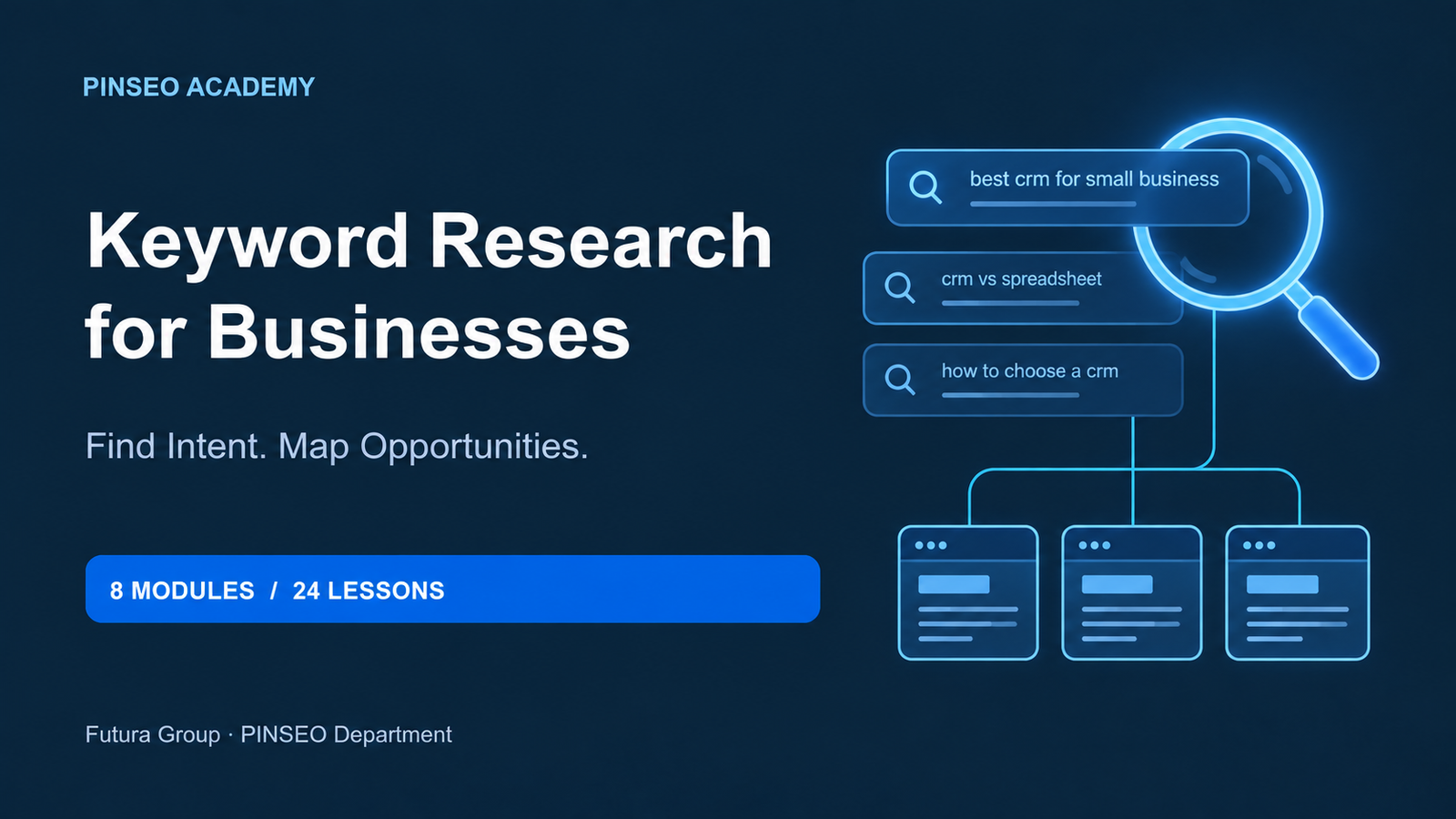
A business-first keyword research system for finding valuable demand, grouping it by intent, mapping it to the right pages, and turning it into a realistic content roadmap.
What you will learn
- Translate business goals into useful keyword criteria
- Discover seed, long-tail and question opportunities
- Interpret metrics without relying on volume alone
- Cluster and map keywords to prevent cannibalization
- Build a prioritized 90-day roadmap and measurement plan
Who this course is for
- Business owners and founders
- Marketing and content teams
- Service, local, e-commerce and B2B businesses
- Freelancers and consultants
Prerequisites
- A clear product, service or business idea
- A website is useful but not essential
- Access to keyword tools or Search Console is optional
How to use the course
Work through the lessons in order, apply every exercise to a real project, and use the workbook to record evidence and decisions. Finish with the audit and action plan before measuring results.
Complete lesson edition
This course includes 24 written lessons, practical exercises, worked examples, and answer guidance. The complete PDF contains every written lesson. Download the full edition and any accompanying workbooks or toolkits from My Account > Downloads using the account that purchased this course.
Build an evidence-based keyword map and a practical 90-day publishing and optimization roadmap for one business offer.
Course Content
Module 1: Business goals, customers, and intent
-
Define the business outcome and conversion
-
Document customer segments and pain points
-
Recognize informational, commercial, transactional, and navigational intent
Module 2: Seed topics from real language
Module 3: Expansion and long-tail discovery
Module 4: Metrics and commercial value
Module 5: Clustering, funnel, and prioritization
Module 6: Keyword-to-page mapping
Module 7: Local, e-commerce, service, and B2B research
Module 8: Roadmap, measurement, and maintenance
Student Ratings & Reviews

No Review Yet