

A website can look respectable and still quietly cost the business money. Leads abandon confusing service pages, shoppers leave product pages without buying, and prospects who search on mobile never reach the contact form. The question is not simply whether a site looks old. It is when should businesses redesign websites to remove friction, improve visibility, and support the way they sell now?
In this guide
When Should Businesses Redesign Websites?
A redesign makes sense when the current website is holding back a clear commercial goal. That goal may be generating qualified inquiries, increasing e-commerce revenue, supporting a new market, reducing manual work, or giving the sales team a more credible tool.
This is why a redesign should not start with colors, fonts, or a competitor’s homepage. It should start with performance. If the site is producing leads, ranking for relevant searches, loading quickly, and helping customers take the next step, a full rebuild may not be necessary. Targeted improvements could be the better investment.
But if the site no longer reflects the business, cannot support current operations, or makes growth harder, patching it page by page often becomes more expensive than rebuilding with a proper plan.
Your Offer Has Changed
Many businesses outgrow their websites before they realize it. A company may have started with one service, then added packages, locations, industries, subscriptions, or an online store. Yet its website still presents the original, smaller offer.
That gap creates confusion. Visitors cannot quickly understand what the company does, who it serves, or why they should choose it. Sales conversations then begin with basic explanations that the website should have handled.
Redesigning is justified when your positioning, pricing model, primary audience, or service mix has materially changed. A new site structure can separate offers clearly, guide visitors to the right pages, and create stronger paths for inquiries or purchases.
Traffic Is Growing but Leads Are Not
More traffic is not automatically good traffic, but it should produce evidence of interest. If organic visibility, paid campaigns, social activity, or referrals are bringing people to the site without generating calls, forms, bookings, or sales, investigate the website before increasing the marketing budget.
The issue may be weak page messaging, vague calls to action, slow mobile pages, irrelevant landing pages, or forms that ask for too much. Sometimes the site is attracting the wrong audience because its content is not specific enough. Other times, visitors understand the offer but do not trust the business enough to act.
A redesign is appropriate when these problems are built into the site architecture. For example, sending every visitor to one generic services page is not easily fixed by changing button text. The business may need focused pages for each major service, audience, or product category.
Mobile Users Have a Poor Experience
For many small and mid-sized businesses, mobile is the first touchpoint, not the backup option. A prospective customer may find the company through Google, an AI-powered answer, a shared link, or a local search result while using a phone. If pages shift, menus are difficult to use, forms are frustrating, or checkout requires too many steps, that visitor may not return.
A mobile redesign is more than making desktop pages fit a smaller screen. It means prioritizing the information buyers need first, making actions easy to complete with a thumb, and reducing anything that delays a decision.
Review mobile analytics alongside desktop results. If mobile traffic is high but conversion is consistently low, the problem may be experience rather than demand. This is a strong signal to assess the site from the ground up.
Search Visibility Has Stalled
A website can have well-written content and still struggle to rank because the technical and structural foundation is weak. Old platforms, duplicate pages, unclear navigation, poor internal linking, slow performance, and unoptimized templates can limit SEO progress.
The same foundation affects AI visibility. Search systems and AI-driven discovery tools need clear, accessible information to understand what a business offers, who it serves, and which pages answer specific questions. Pages built around vague marketing language often give those systems little to work with.
Not every ranking problem requires a full redesign. A technical SEO cleanup and content plan may be enough. However, a redesign becomes practical when the current platform makes essential work difficult, such as editing metadata, creating useful landing pages, improving structured content, or fixing page speed without repeated developer work.
The Website Is Hard to Manage
A site that only one former developer can update is an operational risk. So is a website where simple changes require code edits, broken plugins are common, and new pages take weeks to publish.
Your team does not need to become a development department. But it should be able to handle normal commercial updates: publishing a case study, changing an offer, adding products, updating a team page, or responding to a seasonal opportunity. A modern website should support the pace of the business.
This matters even more for e-commerce operators. Inventory changes, product variations, shipping rules, promotions, and customer questions create constant work. If the store creates manual tasks that should be automated or makes errors likely, redesigning the experience and underlying workflows can protect margin as well as revenue.
Customers or Sales Teams Keep Asking the Same Questions
Repeated questions are valuable evidence. If prospects regularly ask what a service includes, whether you operate in their area, how pricing works, what happens after they submit a form, or whether a product is in stock, the website is not answering key buying questions.
A redesign can turn those objections into useful content. Clear service pages, comparison sections, process explanations, FAQs where they are genuinely useful, product specifications, and proof of results can move buyers forward before they speak to anyone.
The goal is not to put every detail on the page. It is to provide enough clarity for the right prospect to take the next action with confidence.
Your Site No Longer Builds Trust
Trust is often lost through small signals: outdated copyright years, broken pages, poor-quality images, inconsistent branding, missing contact details, old team information, or a checkout that feels unfamiliar. For service businesses, weak proof can be equally damaging. Visitors want signs that the company understands their problem and can deliver.
A redesign should build credibility into the experience, not add it as an afterthought. That may include clearer positioning, customer outcomes, case studies, certifications, delivery processes, better product information, and visible ways to contact a real person.
For businesses entering larger contracts or more competitive markets, trust can be the deciding factor even when the offer and price are strong.
Redesign or Refresh: Choose the Right Level of Work
A refresh is usually enough when the foundation works but selected pages need better copy, visuals, calls to action, or conversion tracking. It is faster, less disruptive, and can produce meaningful results when the site structure is already sound.
A redesign is the better choice when the platform is limiting growth, navigation is confusing, the brand and offer have changed, or the site needs new functionality such as e-commerce, booking, client portals, automation, multilingual pages, or integrations with business systems.
The trade-off is real. A full redesign requires more decisions, more testing, and careful migration to avoid losing existing search equity. Redirects, page URLs, metadata, high-performing content, analytics, and conversion tracking must be planned before launch. A beautiful new site that loses valuable rankings or breaks lead tracking is not a commercial win.
Build the Redesign Around Business Outcomes
Before approving a redesign, define what success looks like in numbers. It could be more qualified service inquiries, a higher checkout conversion rate, faster publishing, lower support volume, improved visibility for priority keywords, or fewer manual tasks in the sales process.
Then map the website around real buyer journeys. A first-time visitor needs a fast explanation of the offer and a reason to trust the business. A comparison-stage buyer needs details, proof, and answers to objections. A ready-to-buy visitor needs a simple path to book, call, request a quote, or check out.
Content, SEO, development, and conversion design should work together from the first planning stage. Treating SEO as a final add-on can create expensive rework. Treating design as decoration can create a site that looks polished but does not sell.
At Futura Group, the practical question is always whether the website can help the business attract, inform, and convert the next customer more effectively. If the answer is no, a redesign should be treated as a growth project with measurable priorities, not a cosmetic expense.
The right time to redesign is before the website becomes the reason a good prospect chooses someone else. Start by identifying the friction your customers face, the opportunities your team cannot pursue, and the revenue the current site leaves on the table. Those answers will tell you whether a targeted refresh is enough or whether it is time to build a stronger foundation.
Three checks before you commission a redesign
A useful redesign brief starts with a customer task that is hard to complete today.
- Open your most important service page on a phone and try to send an enquiry. Record exactly where the journey breaks.
- Compare the cost of fixing that step with the cost of rebuilding the template across all service pages.
- Ask the supplier to include redirects, form testing and post-launch measurement in the quote.
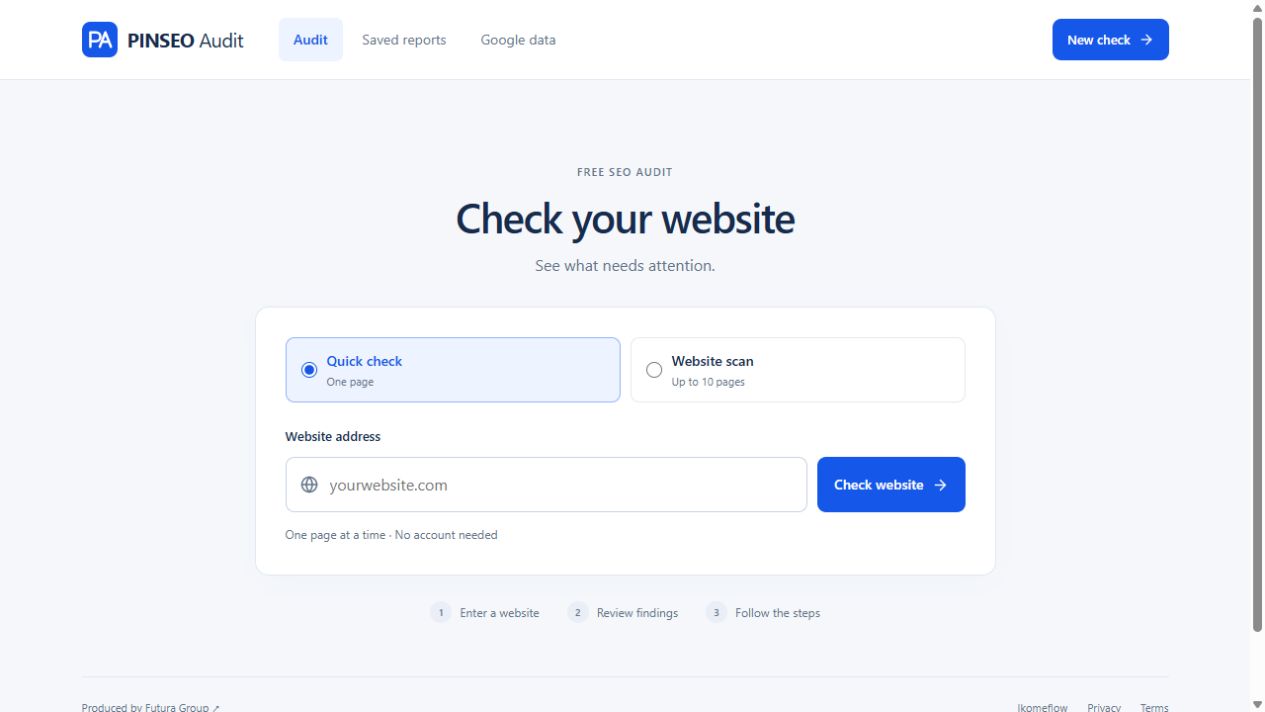
Test a representative page with PageSpeed Insights so your brief includes a performance baseline.
Share your URL and the step that costs you enquiries. Futura Group can review the scope with you before you commit to a rebuild. Request a website redesign quote.