
An SEO course for freelancers should help you deliver work a client can understand: a clear page brief, specific improvements and a sensible measurement plan. PINSEO Academy’s On-Page SEO Blueprint costs $59 USD as a one-time course purchase and teaches nine modules through 27 written online lessons.
This is focused on-page training, rather than a complete agency-building or certification programme. If you write content, design websites or help clients improve existing pages, the nine skills below explain how the course can support a documented page project. Review the curriculum and learning format before you enroll.
| Before you enroll | Course details |
|---|---|
| Course price | $59 USD, one-time course purchase; check the final checkout total |
| Course structure | 9 modules and 27 written lessons |
| Learning format | Self-paced online training with practical exercises |
| Study estimate | Approximately 3–4 hours, plus work on your chosen page |
| Final project | Optimise and document one page, with a review and action plan |
Table of Contents
1. Start an SEO course for freelancers with the client’s page goal
Before changing a title or adding copy, agree what the page should help someone do. A service page, product page and tutorial can answer different questions. Record the intended visitor and the next action, then review the search results for signs of the dominant intent.
The course begins with intent, search-result patterns and page strategy. For a freelance project, turn that work into a short brief the client can review. Keep the page goal separate from an unsupported promise to increase rankings. A clear brief helps explain why an edit belongs on this page rather than another one.
2. Map the topic without giving every page the same job
A useful SEO course for freelancers should help you organise keywords into a page plan. Start with the primary topic, supporting terms and questions the visitor needs answered. Check whether another existing page already serves that purpose before proposing a new one.
On-Page SEO Blueprint includes keyword research and mapping. Use your practice project to document one primary topic and the best-fit page. If your main need is a broader demand and content plan, compare Keyword Research for Businesses. It is a separate course, not an additional requirement for every page project.
3. Write page titles, descriptions and headings with a purpose
A client should be able to see what changed and why. Prepare a proposed title, description and heading outline that accurately describes the page. Give each section a clear job, and keep the URL readable when a change is justified and approved.
The course covers snippets, heading structure and durable URLs. In a freelance handover, include the original wording, the proposed wording and a brief reason for the edit. Avoid changing an established address simply to make it look tidier; URL changes may require redirects and checks beyond a writing assignment.
4. Improve content using evidence rather than generic claims
A strong page explains the offer, answers relevant questions and supports important claims. Gather approved facts from the client before adding information about experience, product performance, delivery or results. Where evidence is missing, ask for it or narrow the wording.
This SEO course for freelancers includes content optimisation, trust signals and entity clarity. Apply those lessons by separating confirmed information from assumptions in your draft. Do not invent testimonials, qualifications or case-study results to make a page persuasive. Clear, specific information gives both the reader and the client something useful to evaluate.
5. Make links and images serve the reader
Internal links should help visitors reach the next relevant page. Choose descriptive anchors and check that important pages are not isolated. For images, consider relevance, file size and an accurate text alternative, rather than placing keywords into every image field.
The course includes internal-link and image-SEO exercises. A practical deliverable is a short link plan with source page, destination and reason, plus an image checklist. If you need a public-page starting check, you can try PINSEO Audit and review the evidence behind each observation. A tool result does not replace your review of the page.
6. Recognise technical checks that need specialist input
An SEO course for freelancers should make technical boundaries clearer, not encourage changes you cannot validate. Learn what indexing directives, canonical URLs and structured data are intended to describe. Then identify which questions require the website owner or developer to act.
On-Page SEO Blueprint covers these technical essentials and a page preflight. Your handover can distinguish a confirmed content issue from a technical question awaiting review. Keep the Google SEO Starter Guide available as a primary reference. A checklist score is not proof that Google will index or rank the page.
7. Turn page-experience findings into a practical fix list
A page can be relevant but difficult to use. Review mobile readability, visual stability, navigation and the steps to contact or purchase. When a performance report identifies an issue, record what it measured and what needs investigation rather than treating one test as a permanent result.
The course introduces Core Web Vitals and page experience. For your client project, separate content changes you can make from development tasks you need to hand over. Do not promise a particular speed score or assume a faster page will guarantee enquiries. Good freelance work includes a clear scope and an agreed way to review the result.
8. Structure useful answers for people and AI-assisted discovery
Readers often need a direct answer before a long explanation. Use clear questions, short summaries and evidence that supports the topic. Make the business, offer and relevant facts understandable without relying on exaggerated claims or repetitive wording.
This SEO course for freelancers includes AI visibility and answer-engine optimisation considerations within the on-page workflow. That is an introduction to answer clarity and extractable information, not a promise that an AI service will cite your client. Preserve human usefulness and the page’s conversion goal while you improve structure.
9. Hand over a page project with a baseline and review date
A useful final deliverable records the page’s starting point, the changes made, unresolved issues and the date to review progress. Agree which measures are relevant. Search impressions, clicks and enquiries answer different questions, and a content change may not explain every movement in the data.
The course’s final module brings the audit, implementation and measurement workflow together. Apply it to one live page you are authorised to edit, or document a practice project honestly. Keep client approval and publishing permissions in your handover. Completing an SEO course for freelancers does not automatically give you permission to change someone else’s website.
What the $59 SEO course for freelancers purchase covers
This SEO course for freelancers includes nine modules, 27 written lessons, practical exercises and a structured audit and measurement workflow. Allow around three to four focused study hours, with additional time to improve and document your chosen page. Basic familiarity with a website editor is helpful; paid SEO tools are optional.
The format is self-paced written online training. Access begins after confirmed payment. Live coaching, personal grading and accredited certification are not included. Review the full curriculum and prerequisites and the current product total before purchasing. The provider is PINSEO Academy, powered by Futura Group; this is not a Google certification or a guarantee of clients, income or rankings.
SEO course for freelancers: enrollment questions
Can I take this SEO course for freelancers without advanced technical knowledge? The course introduces concepts in plain language, then asks you to practise on a webpage. Bring access to a page you can review and be ready to ask a developer for specialist changes when needed.
How do I access this SEO course for freelancers after purchase? Complete checkout with your study account. After payment is confirmed, sign in through the student dashboard for the written lessons and practical exercises. Use the contact page for purchase or access questions.
Is it the right course for store pages? The Blueprint teaches a general page workflow. If your project centres on products and categories, compare Ecommerce SEO for Sales before choosing. Review the Academy course options against the task you want to complete.
Ask what you can show a client after training
A practical SEO course for freelancers should help you explain a page change to a client. Compare the work you will produce: a short brief, an edited page and a record of the changes you made. Choose a practice page that has a clear next step, such as requesting a proposal, and check whether the revised version makes that action easier to find.
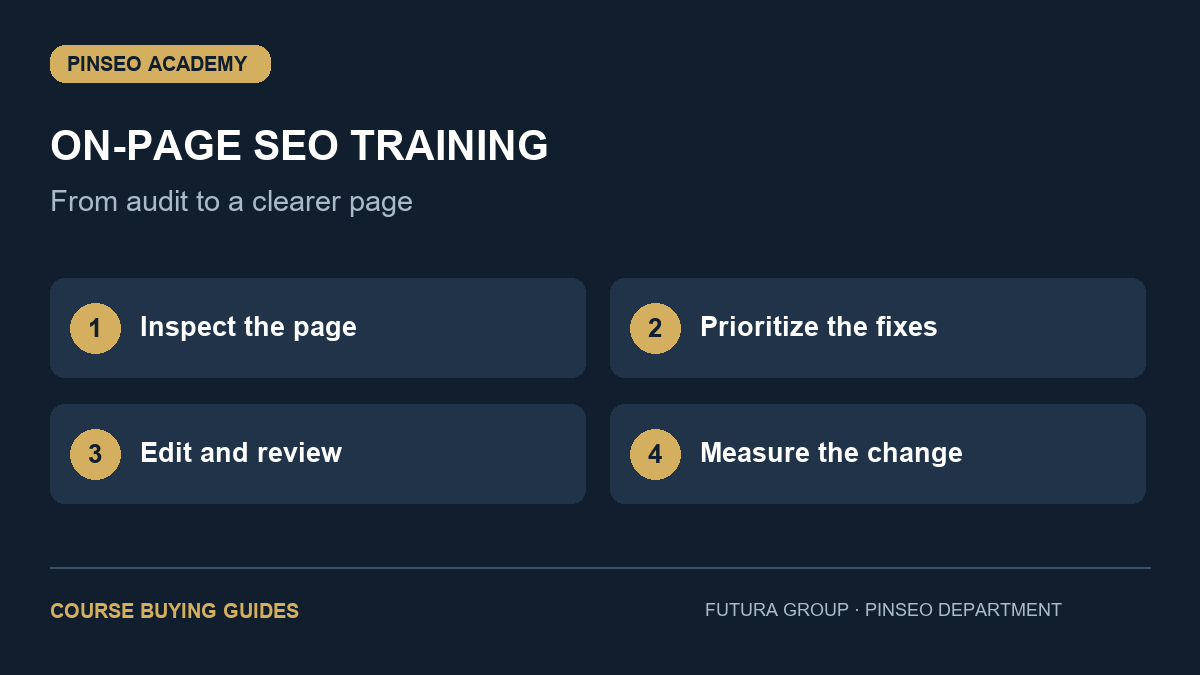
See the lesson format and exercises on the On-Page SEO Blueprint course page before deciding whether the training fits your client work.
Review the course and take the next step
Ready to begin an SEO course for freelancers with a clear page project? Review the $59 On-Page SEO Blueprint course, confirm the format fits how you learn, and begin with one page you can optimise and document properly.